
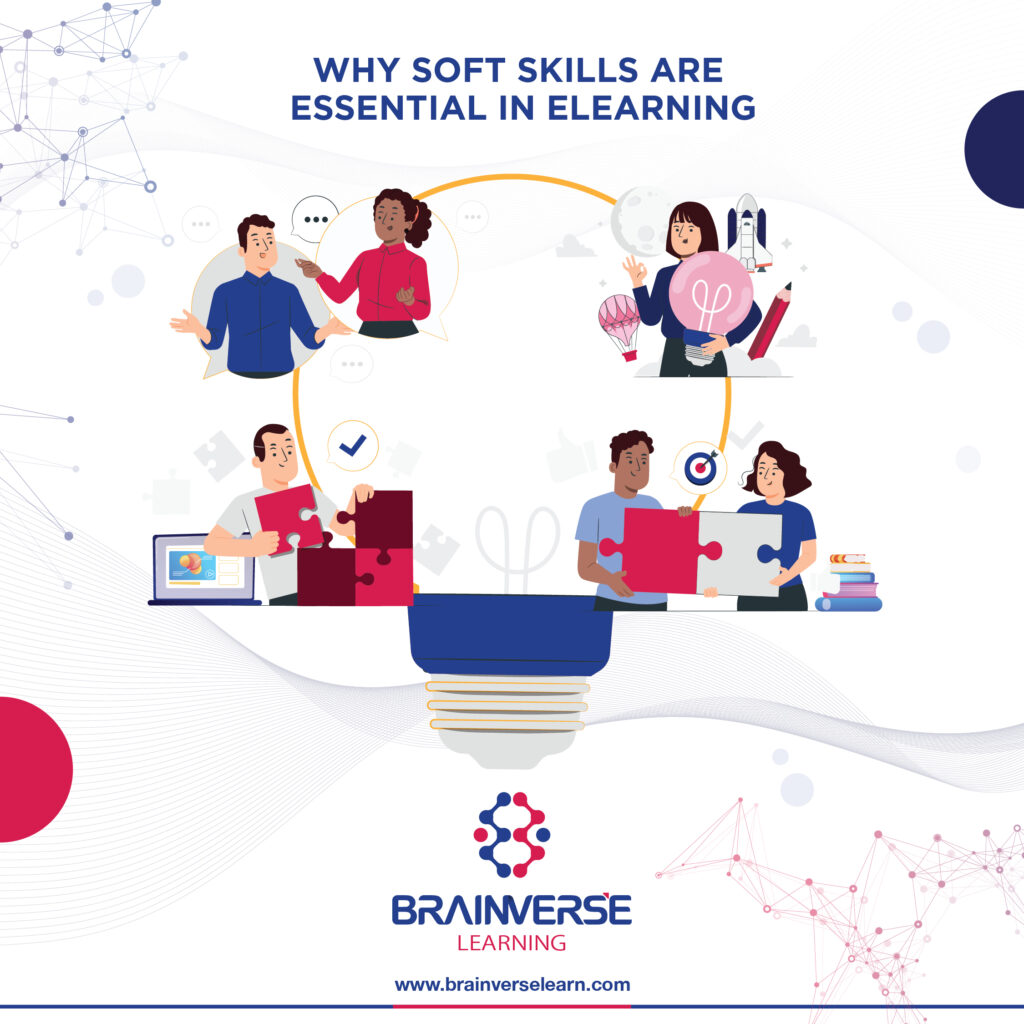
In today’s rapidly changing professional landscape, possessing technical expertise alone is often not enough to achieve career success. Employers now place a high value on soft skills—qualities such as communication, adaptability, emotional intelligence, and teamwork. These interpersonal and personal attributes are critical for workplace success, yet they are often underdeveloped in traditional educational settings. With eLearning’s growing reach and flexibility, integrating soft skills training into digital education has become an essential component of a well-rounded learning experience.
One of the significant benefits of eLearning is its accessibility to diverse learners across the globe. As online courses become increasingly available, they must address not only hard skills but also soft skills, which are equally necessary to bridge the gap between academic learning and real-world job requirements. Many graduates, for instance, enter the workforce with strong technical knowledge but struggle to communicate effectively, collaborate with colleagues, or adapt to new situations. By incorporating soft skills training into eLearning courses, providers can help learners cultivate the complete set of abilities needed to succeed in modern workplaces.
Soft skills like active listening, empathy, and communication significantly influence a learner’s engagement with an eLearning program. Courses that emphasize communication skills, critical thinking, and adaptability tend to keep learners more engaged, as they’re actively working on skills that help them interact with instructors and peers in meaningful ways.
For example, through interactive modules that simulate workplace scenarios, learners can practice problem-solving and decision-making skills in real-time, allowing them to see the value of what they’re learning. This not only increases engagement but also improves knowledge retention as learners find the material more relevant and applicable.
As the professional world transitions to remote and hybrid work environments, the demand for soft skills has risen. Skills like self-motivation, digital communication, and time management have become critical as employees work independently and communicate across virtual platforms. In eLearning, where learners already rely on digital tools, there is a unique opportunity to help them develop these skills in a setting that mimics today’s professional environments.
For example, time management modules, collaborative digital projects, and asynchronous communication exercises within an eLearning program can equip learners with the confidence to work autonomously and communicate effectively in a remote setup.
Emotional intelligence (EI) is a fundamental soft skill that enhances personal and professional relationships. eLearning platforms can foster EI through activities that encourage self-awareness, empathy, and conflict resolution. By working through case studies, group projects, or role-playing scenarios, learners can develop a more profound understanding of how to manage their emotions and navigate challenging situations—a critical skill for any workplace.
Adaptability is another crucial component of EI. eLearning modules that introduce learners to various problem-solving techniques, as well as scenarios that require quick adaptation, can help them develop resilience and flexibility. These qualities are invaluable in today’s fast-paced and ever-evolving job market.
Communication is perhaps one of the most valued soft skills, and it is essential in an online learning environment. Through written discussions, video conferences, and collaborative projects, learners are constantly practicing communication in eLearning programs. The virtual format of eLearning can provide opportunities to work on public speaking, professional writing, and cross-cultural communication—all of which are invaluable in a globalized job market.
Effective communication modules in eLearning can also cover digital etiquette and online networking skills, preparing learners to navigate digital workspaces and interact professionally with colleagues from different cultural backgrounds.
While eLearning can be an individual experience, the most effective programs emphasize teamwork through collaborative tasks. Group projects, peer reviews, and interactive assignments help learners develop collaboration skills, even in a digital setting. By working together with peers, students learn to appreciate different perspectives, delegate tasks, and solve problems collectively—all crucial teamwork skills that employers seek.
This collaborative experience is invaluable for learners aiming to work in team-based environments, as it teaches them to appreciate diverse viewpoints, work through conflicts, and align personal goals with group objectives.
eLearning programs that include self-directed learning and problem-solving exercises help learners become more proactive in their personal and professional growth. This lifelong learning mindset is invaluable in a world where the only constant is change.
The importance of soft skills in today’s job market cannot be overstated. As eLearning continues to redefine education, integrating soft skills training has become essential for creating well-rounded, job-ready individuals. With its flexibility and interactivity, eLearning offers an ideal platform for learners to develop these crucial skills alongside technical knowledge. By prioritizing soft skills in online education, we’re not only preparing learners for their immediate career needs but also empowering them with the adaptability and resilience they’ll need for future success.
Brainverse Learning recognizes the need for soft skills training and is committed to providing an engaging eLearning experience that equips learners with both technical and interpersonal competencies. As we continue to innovate, we’re dedicated to helping our learners develop the essential skills for a fulfilling and successful career.


